
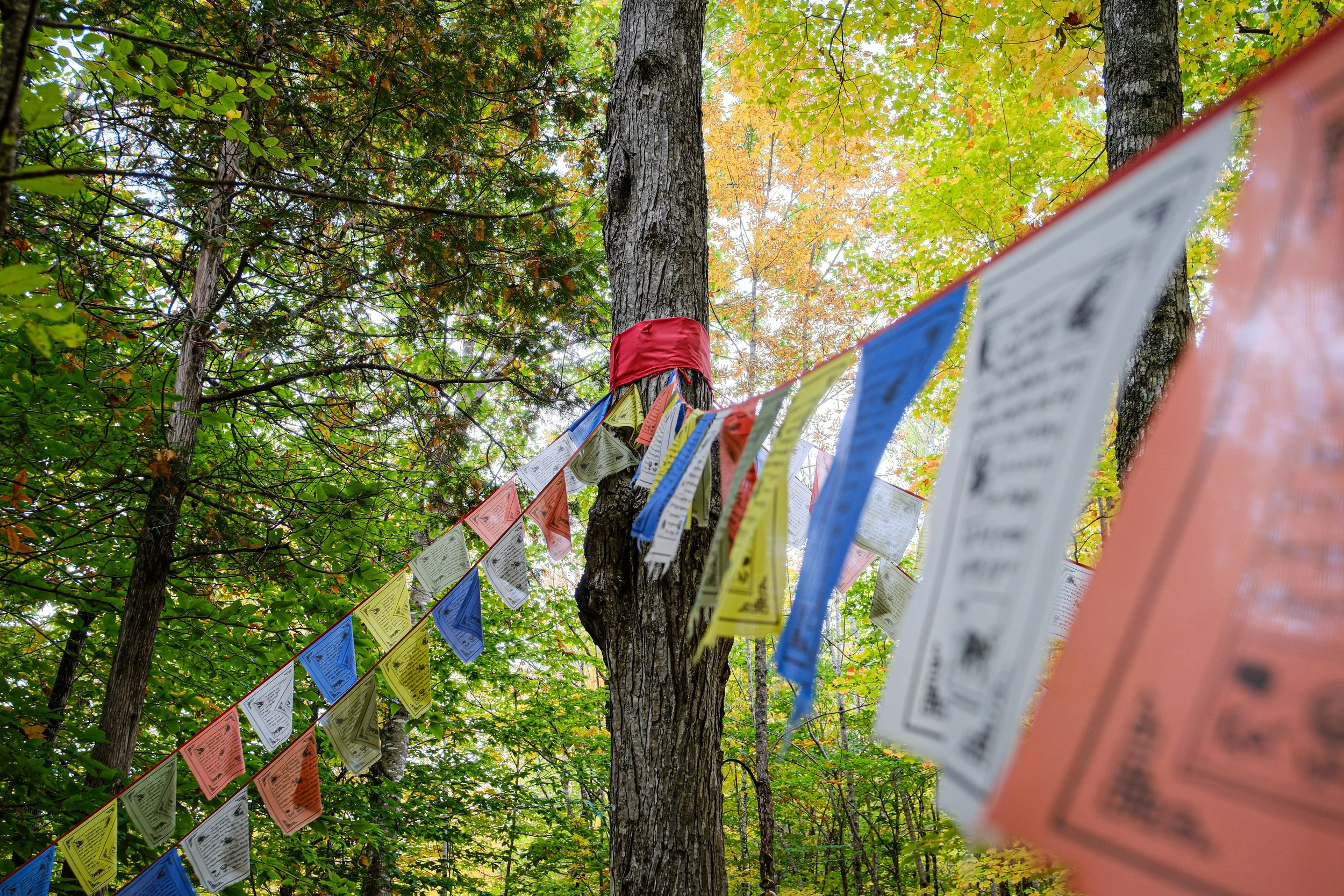

Sacred Celebrations
The Great Holy Days of the Yogic Tradition
Nine times a year, we gather to honor and celebrate our most precious possession: life itself.
On these days, residents, returning guests, and first-time visitors gather through shared practice and ceremony.
Across cultures and millennia, humanity has gathered around sacred fires, adorned holy places, prepared extraordinary foods, made offerings, told sacred stories, and celebrated together.
These acts express something fundamental: life is not ordinary. It is worthy of our attention, our gratitude, our reverence, and our care. Much of modern life has lost this rhythm. Even the extraordinary fact of being alive can disappear beneath the demands of living. Sacred observance interrupts that forgetting.
It places what matters most at the center again—life, the forces that sustain it, the mysteries from which it arises, and our relationship to the whole of which we are a part.
Sacred Time in the Yogic Tradition
Traditional Yoga has preserved an extraordinary continuity of sacred life for millennia.
Across the Yogic year, particular days and nights are given to the divine principles of life, illumination, transformation, devotion, and the great realities toward which Yoga directs human attention. These are not historical remembrances preserved because they are old. They are living observances because what they express remains alive.
Each takes its own form. Temples are transformed with flowers and light. Particular mantras and practices are undertaken. Yajña fires are kindled. Offerings are prepared. Ancient stories are told again. Incredible meals and sweets are shared. Sometimes the night itself becomes the container for practice and celebration.
In this way, the great principles of Yoga are not left as ideas. They are given form. They are entered through the body and senses, through fire and food, sound and silence, beauty and devotion, practice and celebration.
To participate is to encounter these principles differently—to move beyond understanding what they mean and experience, even briefly, the conditions they were meant to create within a human life.
And year after year, they are lived again.
A Living Tradition
On several of the great holy days, we open the Ashram and invite others to enter the observance alongside us. No previous knowledge of the tradition is required. Guests are welcomed into the practices, ceremonies, worship, and celebration through which the day unfolds, and given the understanding needed to participate.
You may sit before a Yajña as mantras are offered into the fire. Take part in pūjā and offerings to deities whose forms have been carried across centuries. Practice alongside Yogis for whom these traditions remain part of daily life. Then gather for a feast prepared as part of the observance itself.
To light a lamp on Dīwalī, practice deep in the night on Mahāśivarātri, enter the worship of Śakti during Navarātri, or honor the Guru on Guru Pūrṇimā is to step into a tradition carried through human hands for centuries.
Not preserved behind glass. Not reconstructed from the past. Still lived.
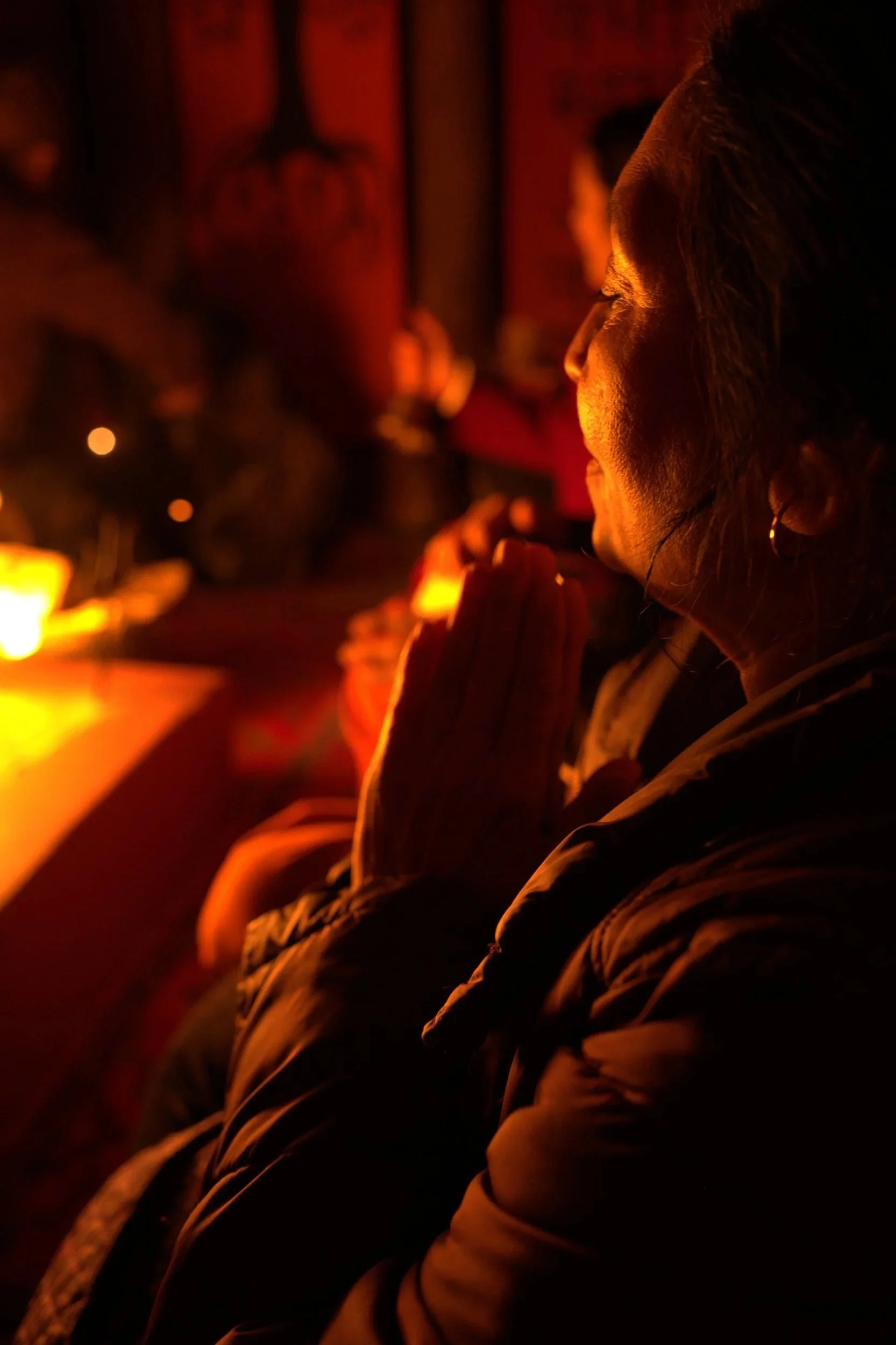
Powerful ceremonies rooted in the ancient Yogic tradition.

Vibrant, traditional foods shared in celebration.
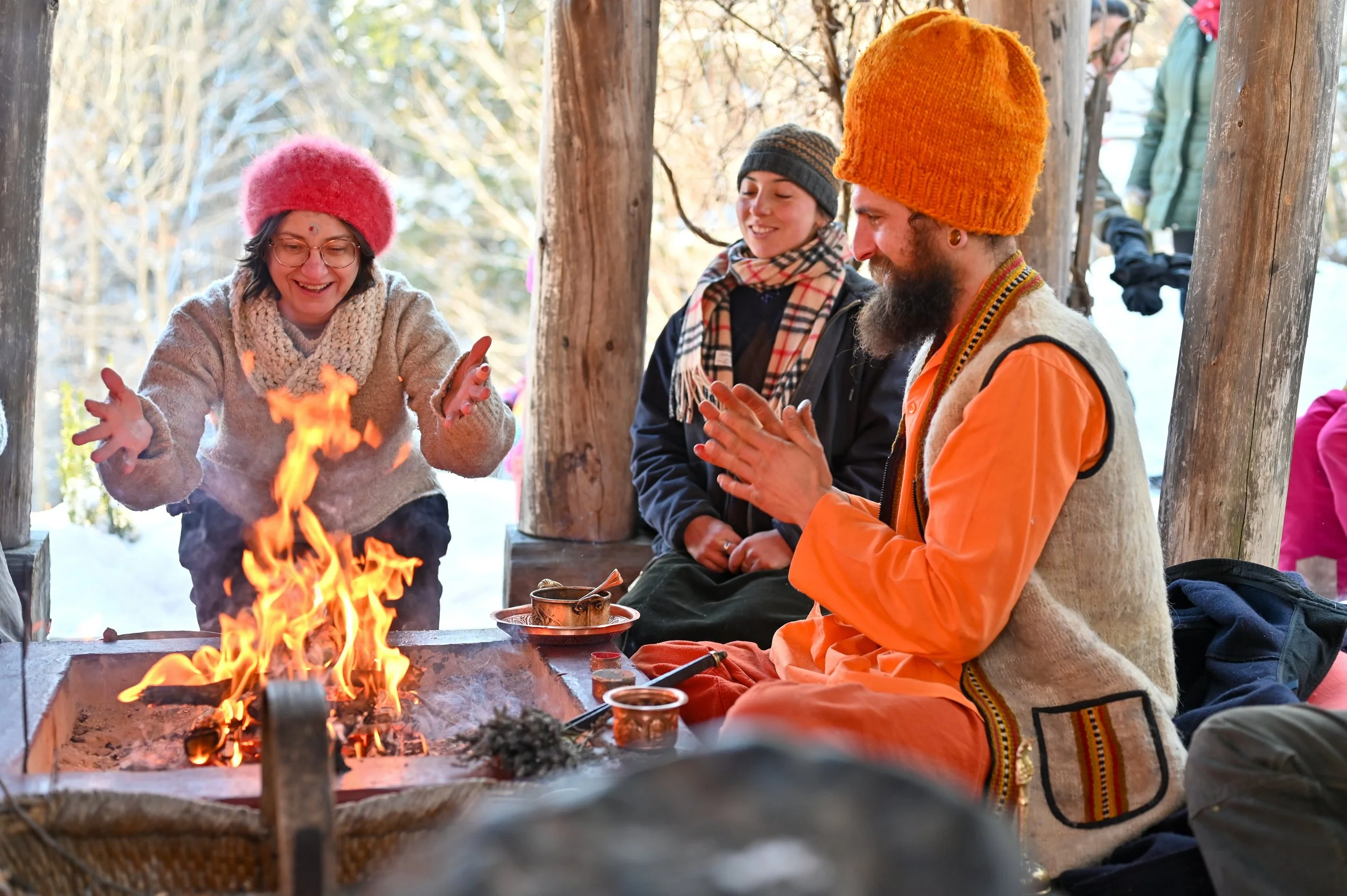
Periods of deep meditation, silence, and inward practice.
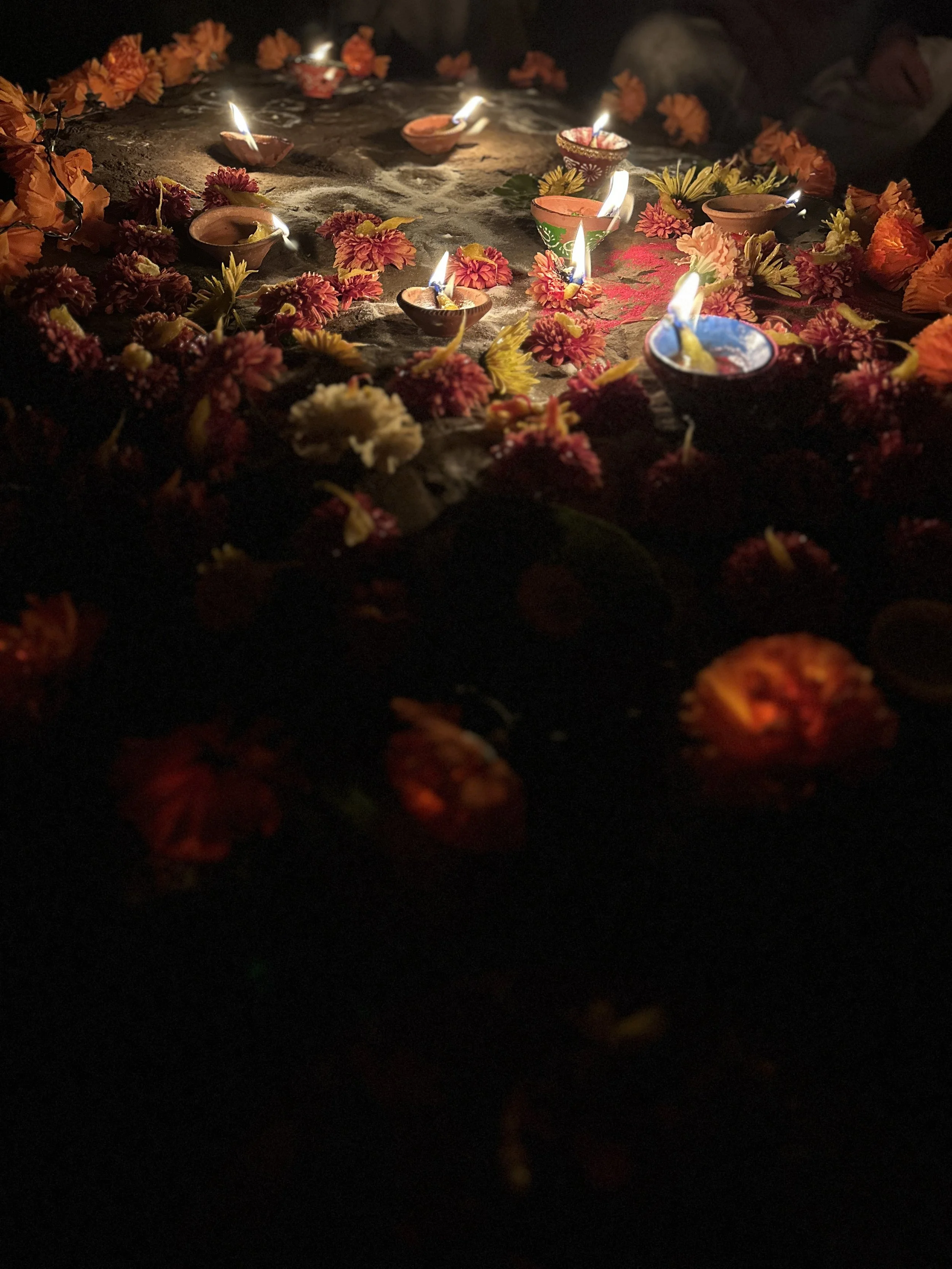
The Sacred Days Still Return
The world in which these observances began has changed beyond recognition.
And still the sacred days return.
The fires are kindled. The lamps are lit. The mantras are spoken. The food is prepared. People gather.
And something that has passed from human being to human being across centuries becomes present once again.
Plan Your Visit
Open to Everyone
Sacred Observances are open to those who wish to enter them with sincerity and respect. No previous experience with Yoga or familiarity with the traditions is required.
Before arriving, guests receive an orientation to the particular observance, what the day or night will hold, and anything needed to participate fully.
Staying at the Ashram
Depending upon the observance, guests may attend for the day or evening, stay overnight, or incorporate the celebration into a longer stay at the Ashram.
Cost
Sacred Observances are offered by donation.
Suggested donations and any overnight options are listed with each observance.
The Great Observances
Āsana · Prāṇāyāma
Yoga Intensive
Classical posture and breath practices, unchanged since they were codified centuries ago, taught by yogis who live this daily. Strength and balance are restored to the body and the nervous system alike.
Pradakṣiṇā & Dhyāna
Meditation
A silent, guided walk through the forest. Untouched land, no path but the one worn by those before you, winding past stone shrines. Heart rate and breath settle on their own—the body's oldest response to quiet.
Mitāhāra
Nourishing Body & Mind
Shared meals, freshly prepared by the yogis in residence and eaten in silence. Built on Sattva, the most central principle in Yoga—balanced, whole, complete: everything the body needs, nothing that it doesn't.
Upadeśa
Living Wisdom
Given by senior yogis of the ashram, the discourses draw on timeless principles of Yoga—understanding that keeps human life in step with the natural order, applied directly to the conditions of modern life.
Agni · Jala
Sauna & Cold Immersion
The heat of the wood-fired sauna and clarity of cold mountain water settle the nervous system, steady Prāṇa, and restore internal silence—sealing the day so that what has been received can be held within.
Puja & Yajna
Sacred Ceremony
Shared meditation closes our day, cultivating sustained attention and deeper perception—an opportunity to experience ourselves within the larger life of which we are a part.
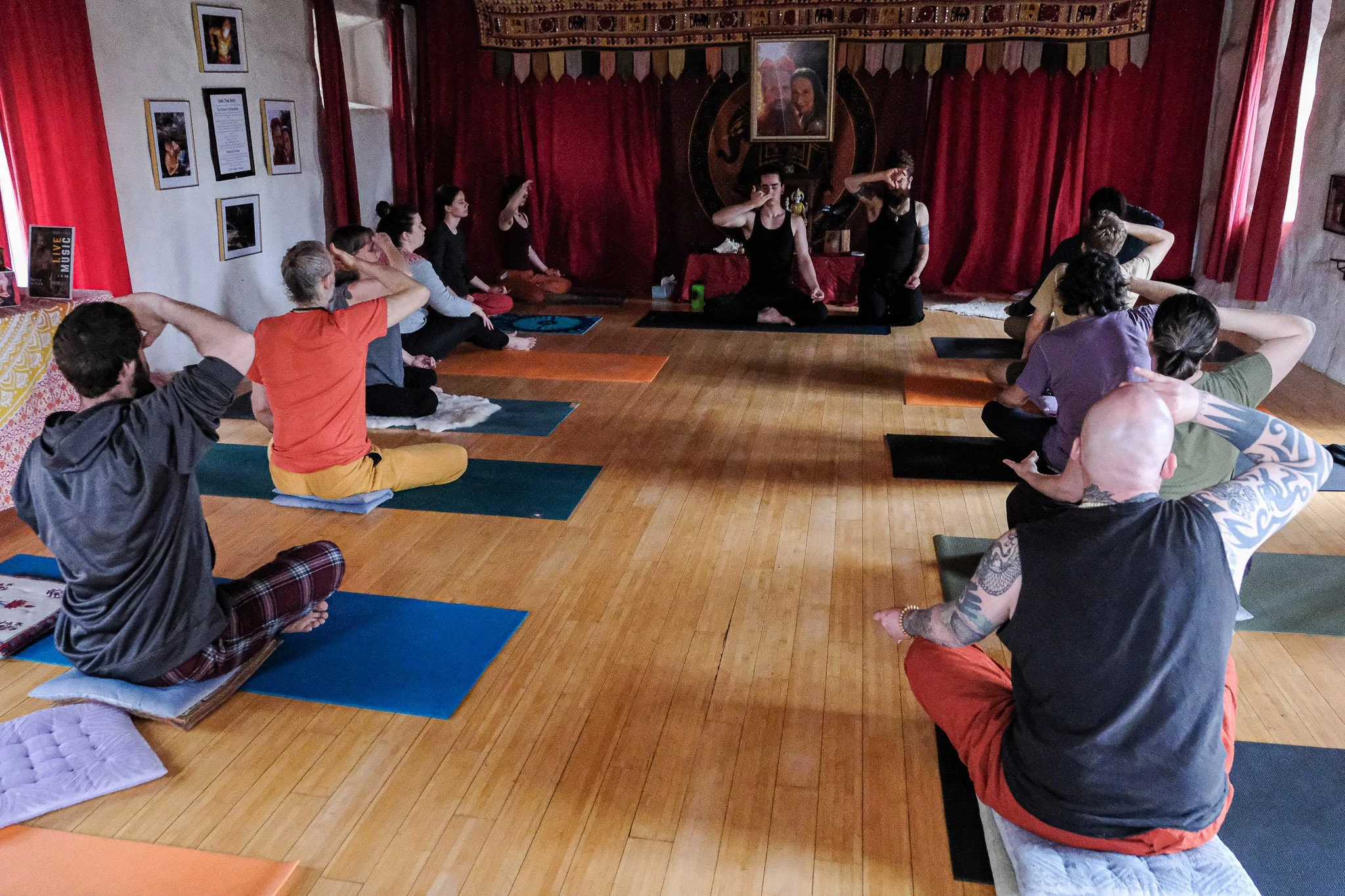
Traditional Yoga practice in Hamsa Yoga Hall
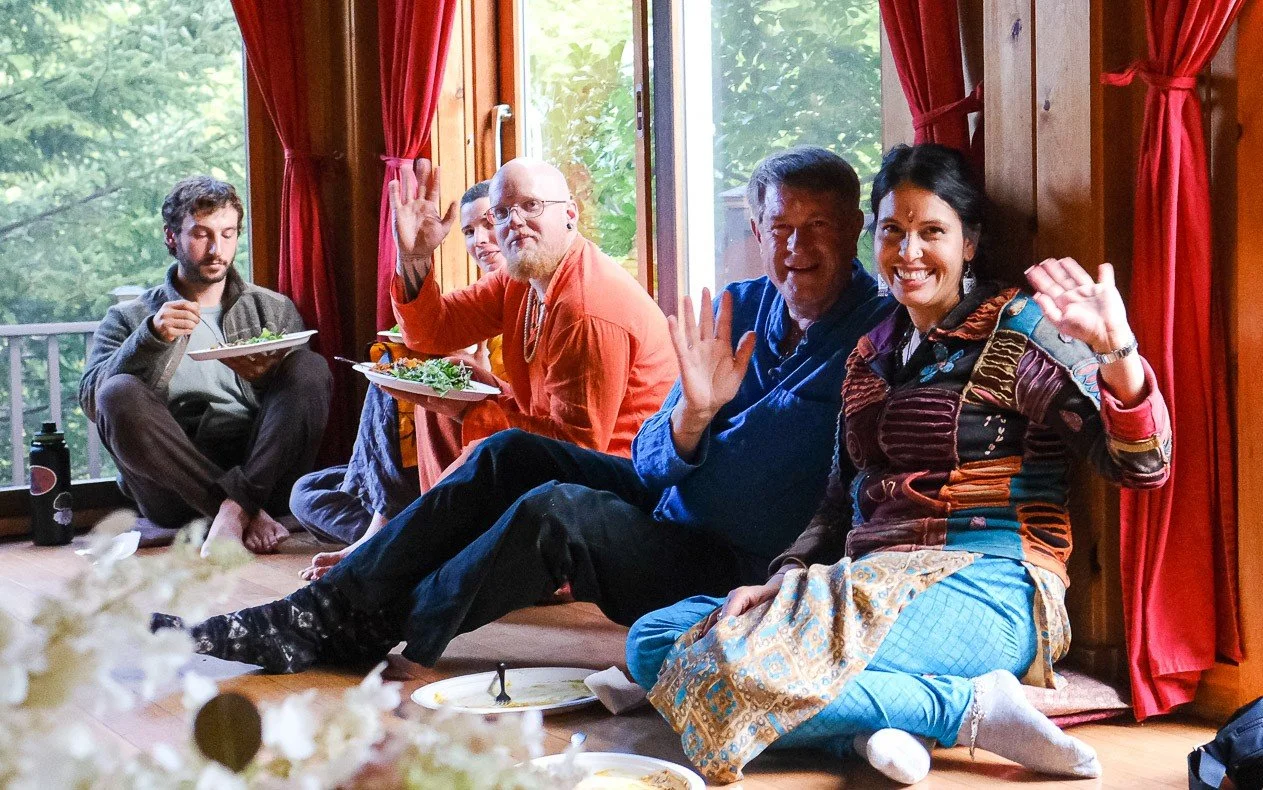
Gathering together over a shared meal
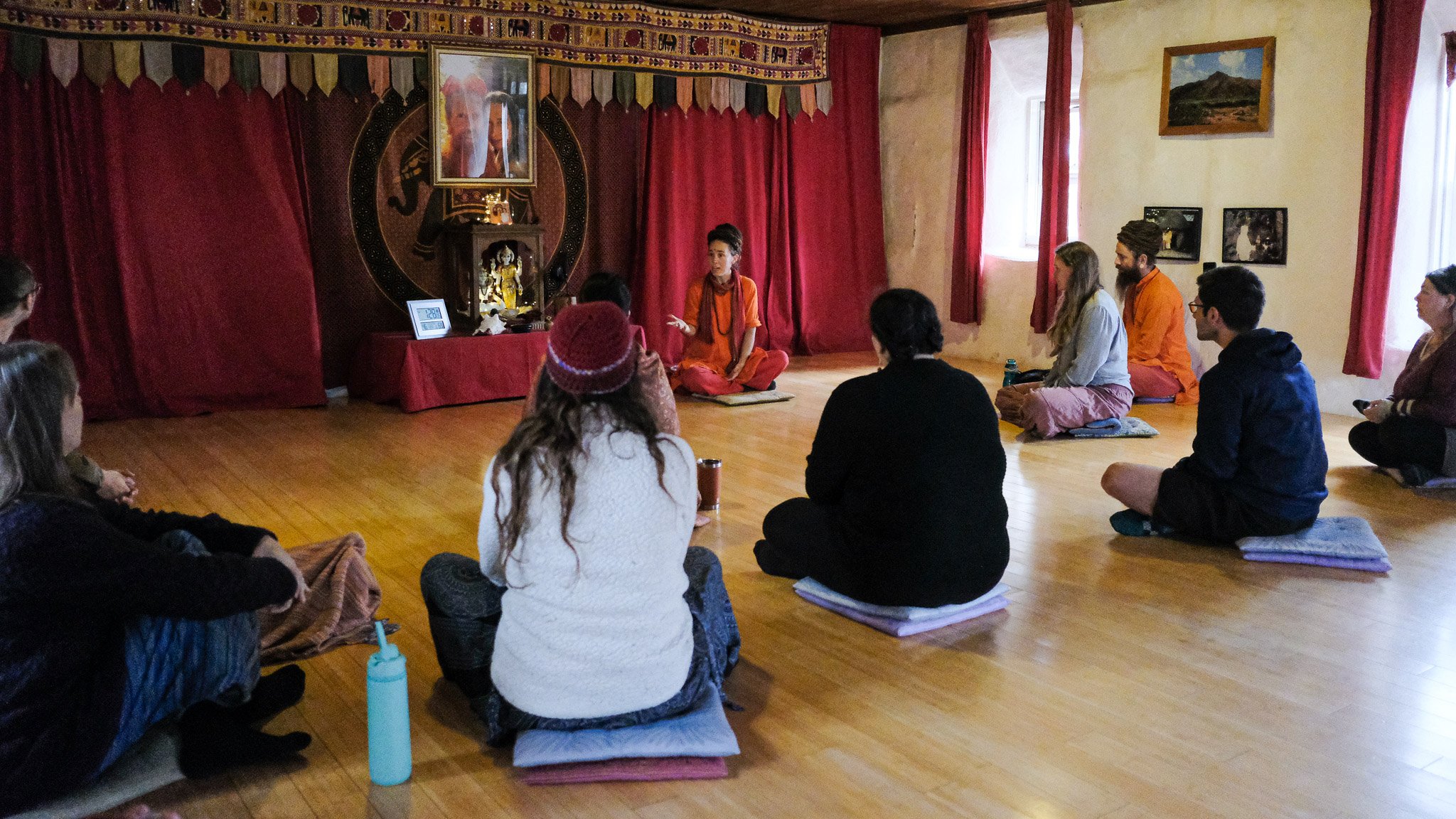
Teachings with senior residents
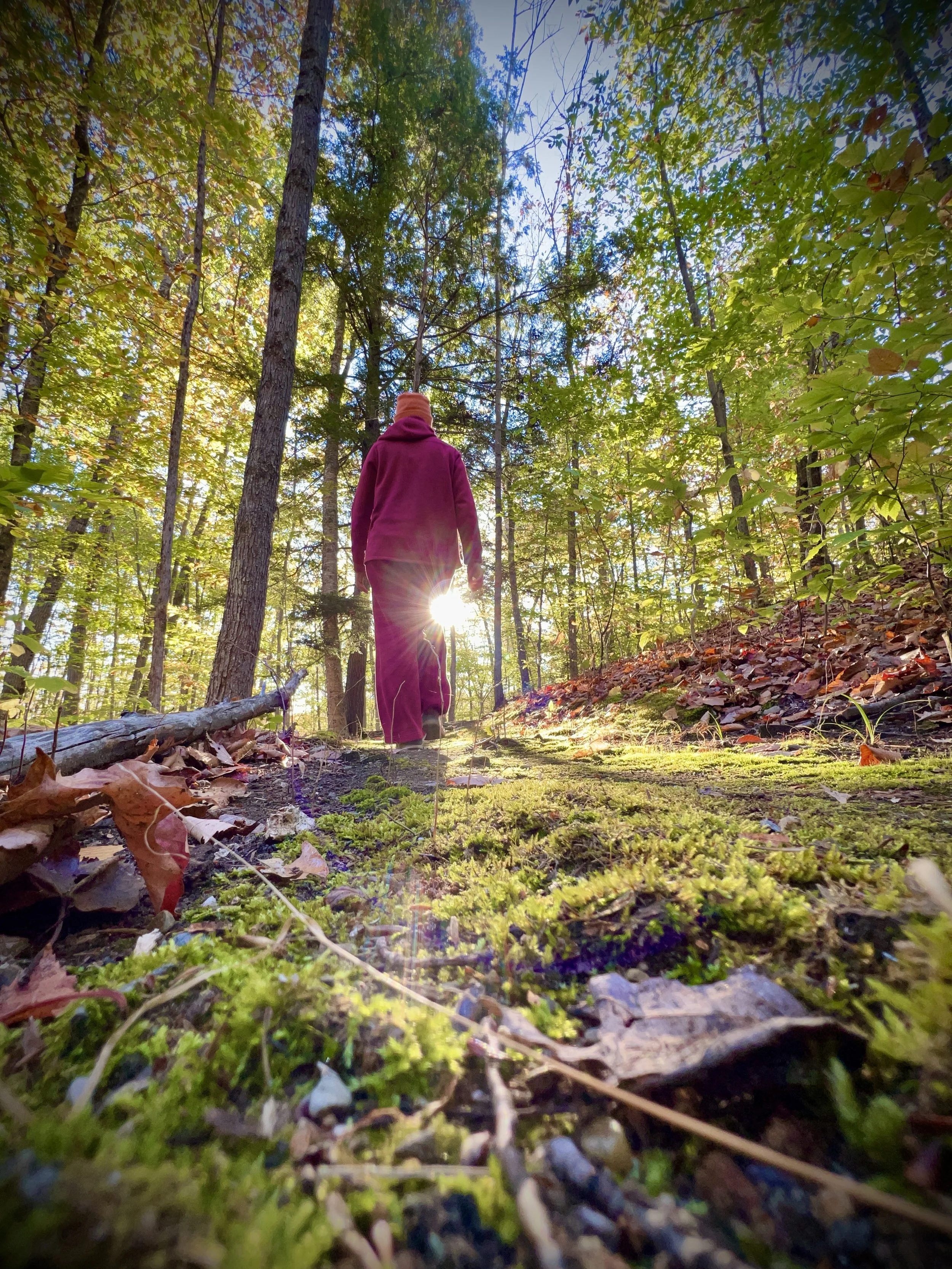
Walking the Ashram’s forest Pradakshina
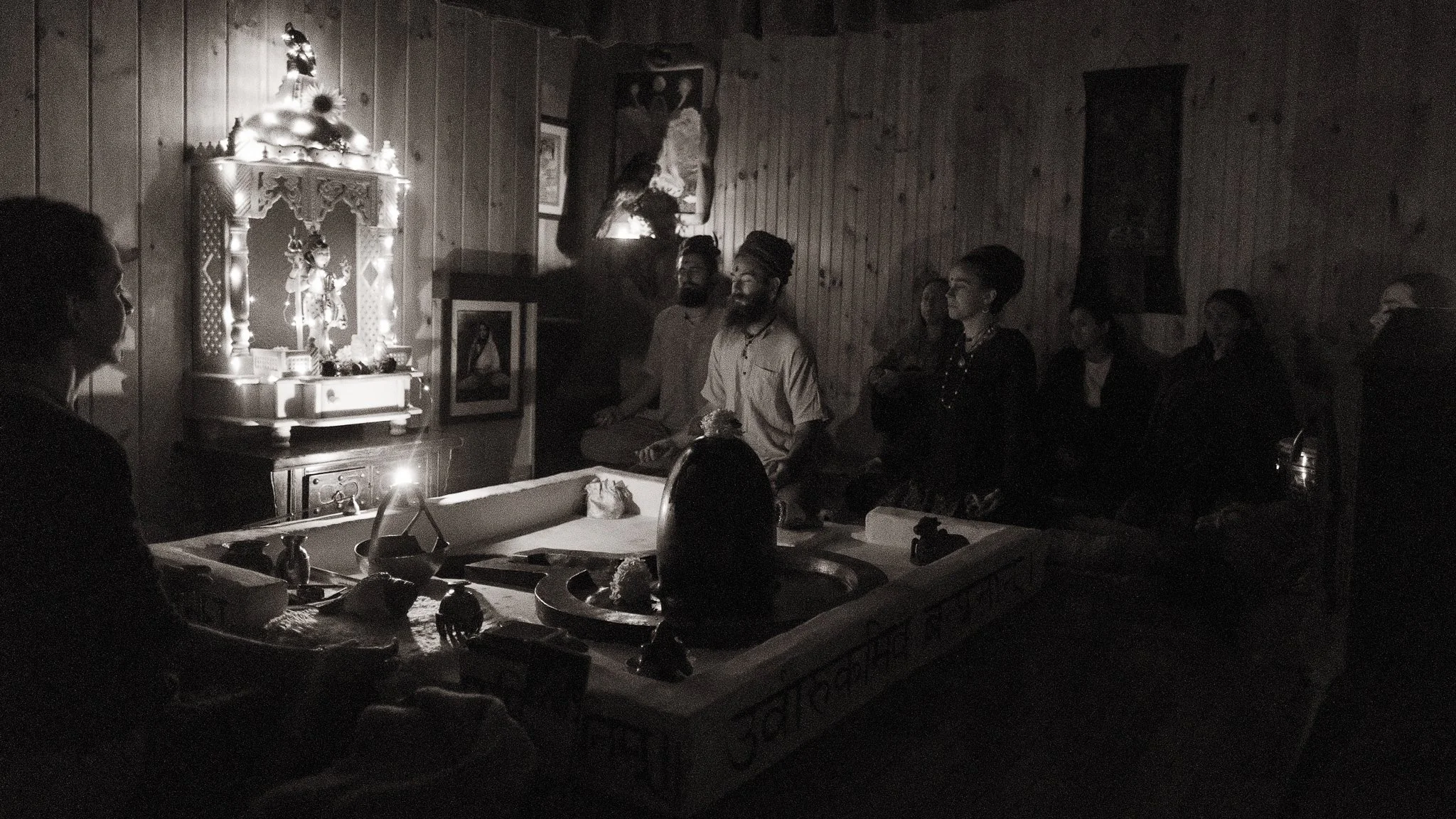
Evening meditation in the Lingam Temple

Cold immersion following the wood-fired sauna
Enter the Observance
You do not need to know the mantras, understand every symbol, or have grown up within Indian culture to participate.
You are entering a living tradition, and you will be shown how to enter it well.
Each observance has its own rhythm. Depending upon the day, it may include Āsana and Prāṇāyāma, meditation, Yajña, pūjā, mantra, teachings, temple worship, Pradakṣiṇā, offerings, music, preparation of sacred spaces, and shared celebration.
And each offers something difficult to encounter through reading or explanation alone: the experience of allowing an ancient sacred tradition to shape the world around you—and, for a time, the way you move within it.