
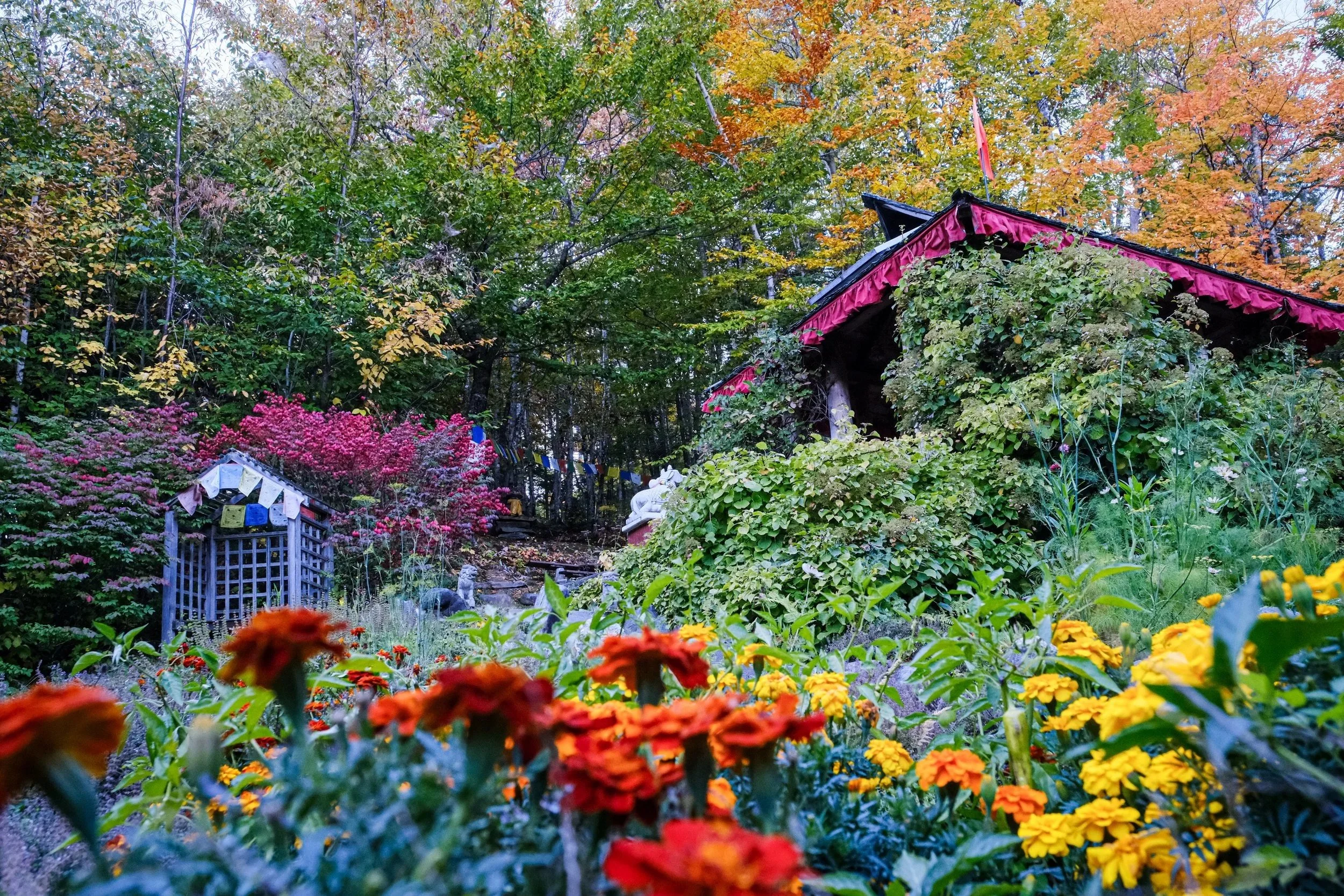

A Traditional Rishi Ashram
The Ashram
The way you live shapes who you are. An Ashram is an environment built deliberately around that fact.
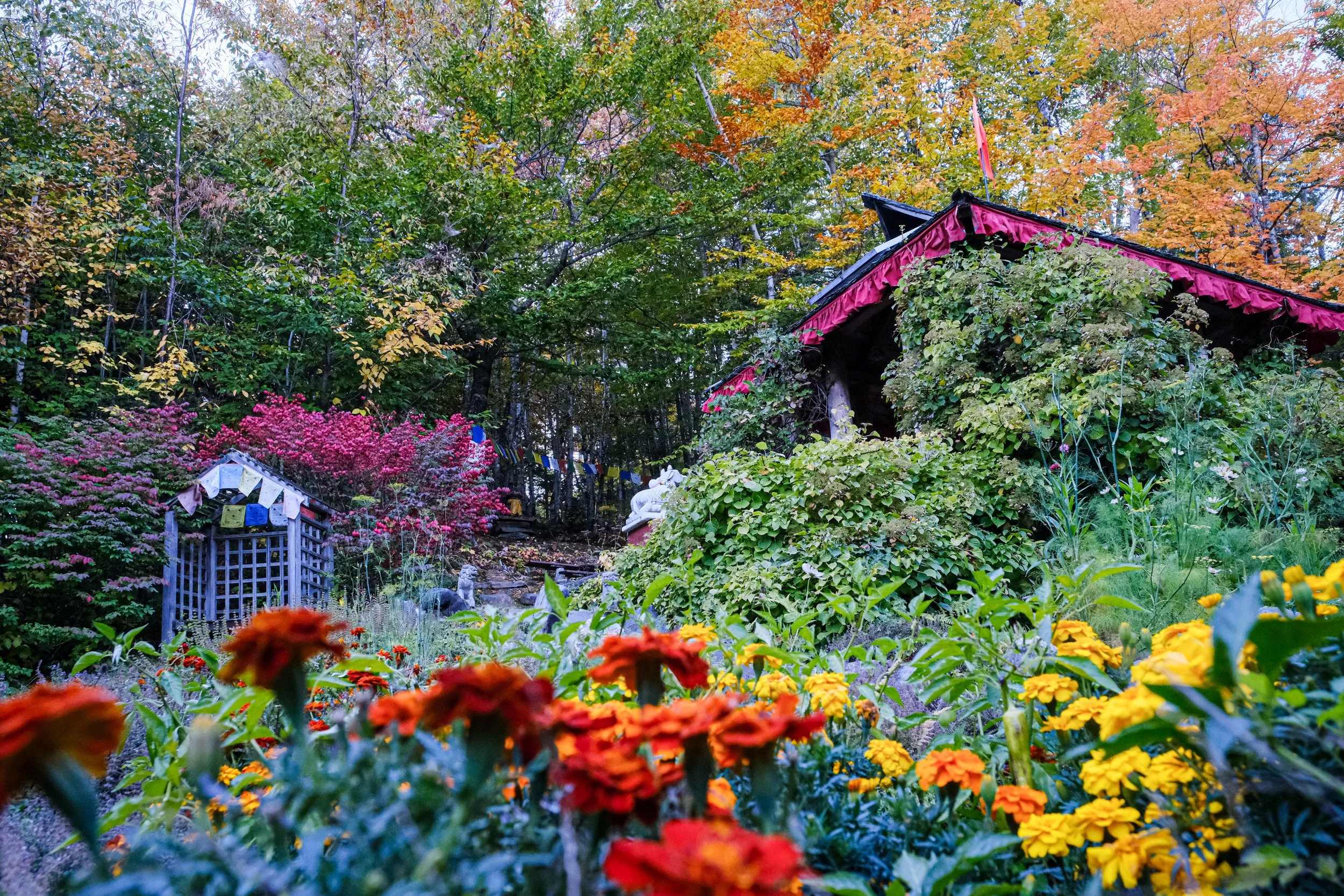
At Sat Manav Yoga Ashram, Yoga is not merely taught. It is lived.
Every morning begins in the Yoga Hall—with Āsana, Prāṇāyāma, Mudrā and Bandha. No modern adaptation. Only ancient application. Evenings end in the cedar-log temple, in Dhyan, meditation. Between them are work, meals, study, and silence, each treated as part of the practice.
Some of the Ashram’s seventeen residents have lived this way for a few years. Others for decades.
Here, Yoga is not one part of life. Life itself is organized around Sādhana.
The Ashram sits on 140 wooded acres nestled in the western mountains of Maine. The pace and pressure of the outside world begin to fall away before you arrive.
What remains is quieter than most places get. Moving water carries across the property from spring through fall, joined by wind, birds, and the sounds of the forest.
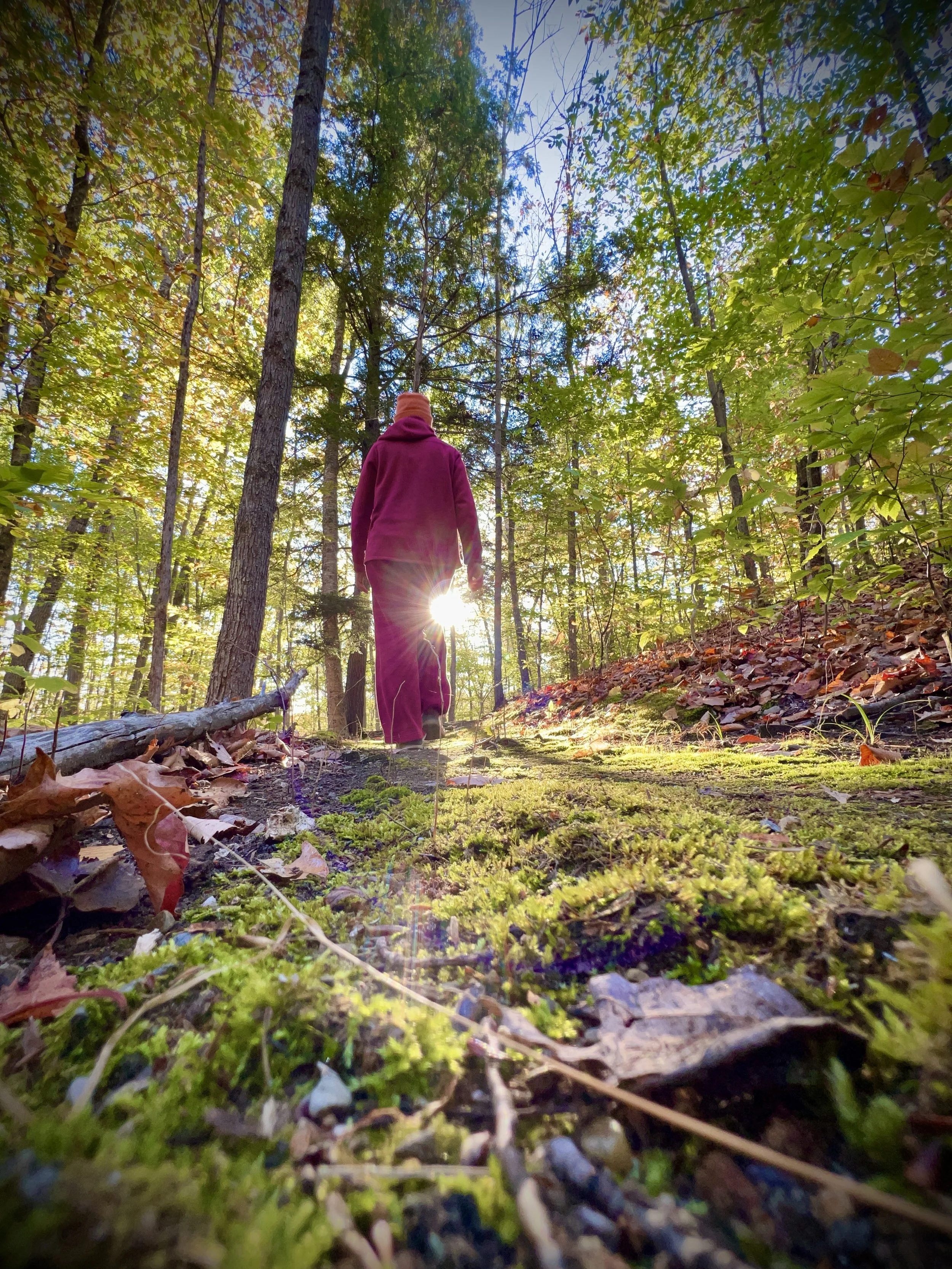
Beneath the trees, footpaths wind between the temples, cabins, Yoga Hall, and dining area
At night, the sky fills with stars. Nothing for miles competes with them.

What is a Rishi Ashram?
A Rishi is a sage whose life has become anchored in such deep inner steadiness that the causes of human suffering—and what restores clarity, balance, and freedom—can be perceived directly.
An Ashram is a place deliberately shaped around serious practice, where the rhythms of daily life, the environment, and the teachings support the deepest levels of clarity, stability, and transformation.
A Rishi Ashram brings the two together: a living environment shaped by the understanding of the Rishis, where others may practice toward that same depth of realization.

The Land
The land is not scenery. It is part of the practice.
Yoga has long recognized that environment shapes human life. The places where we spend our days affect how we breathe, sleep, think, and relate to one another. Over time, they shape the nervous system itself.
The quiet, the distance from ordinary demands, and the natural rhythms of the forest create conditions in which the body can begin to settle. Attention becomes less fragmented. Breathing changes. A different pace of life becomes possible.
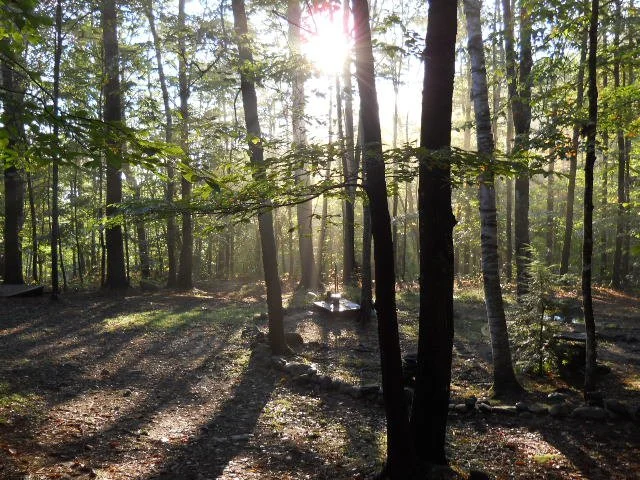
Streams run through the property. Miles of walking-meditation trails pass stone shrines and quiet places to sit. Most of the forest remains untouched, cleared only where a building or path required room.
The land offers the conditions in which human life can become quieter, steadier, and more deeply aligned with the rhythms that sustain it.
The Ashram is secluded and completely surrounded by forest.
Morning sunlight filters its way through the trees on the walk to the Yoga Shala.
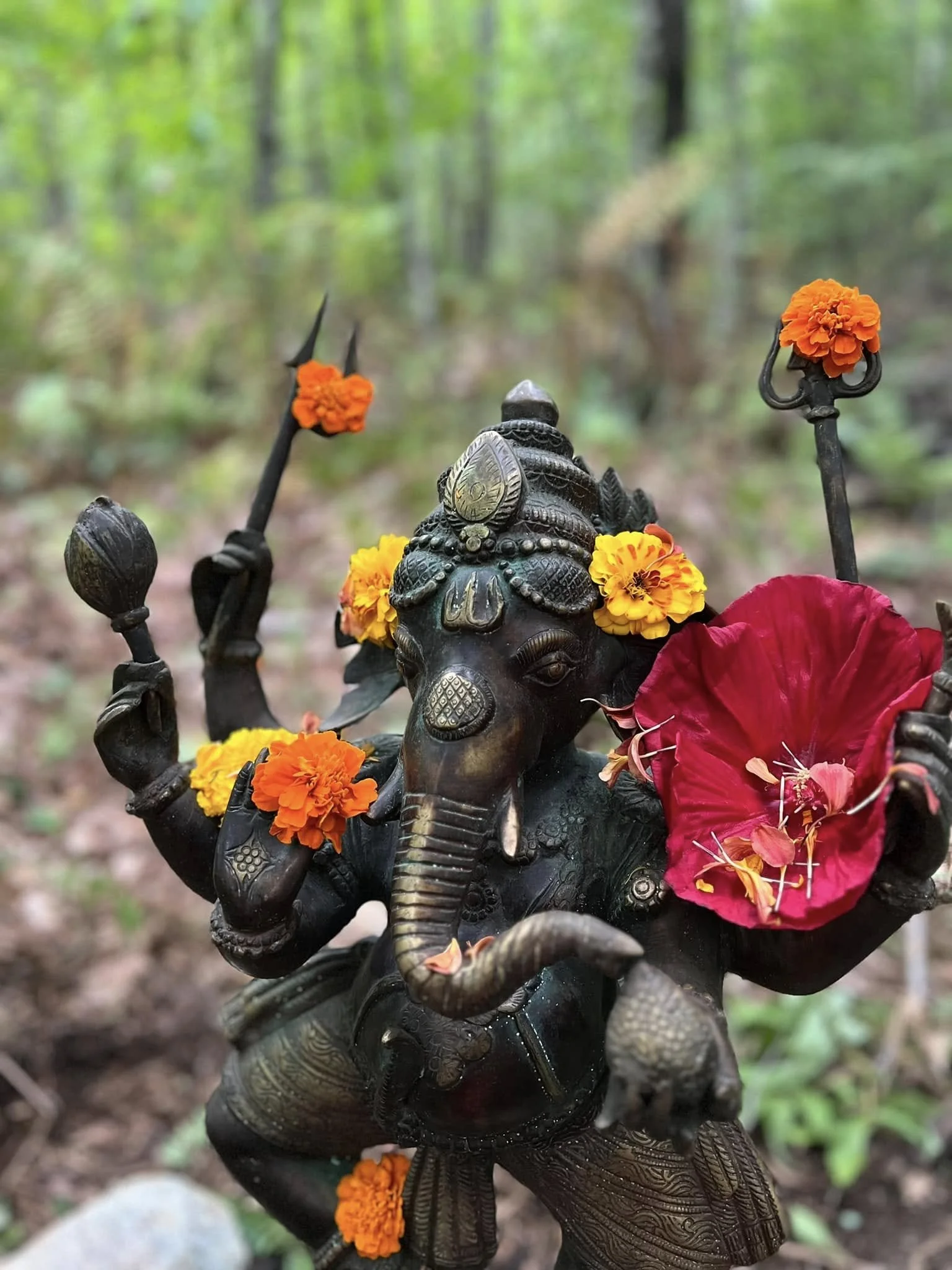
One of the shrines marking the walking meditation trails.
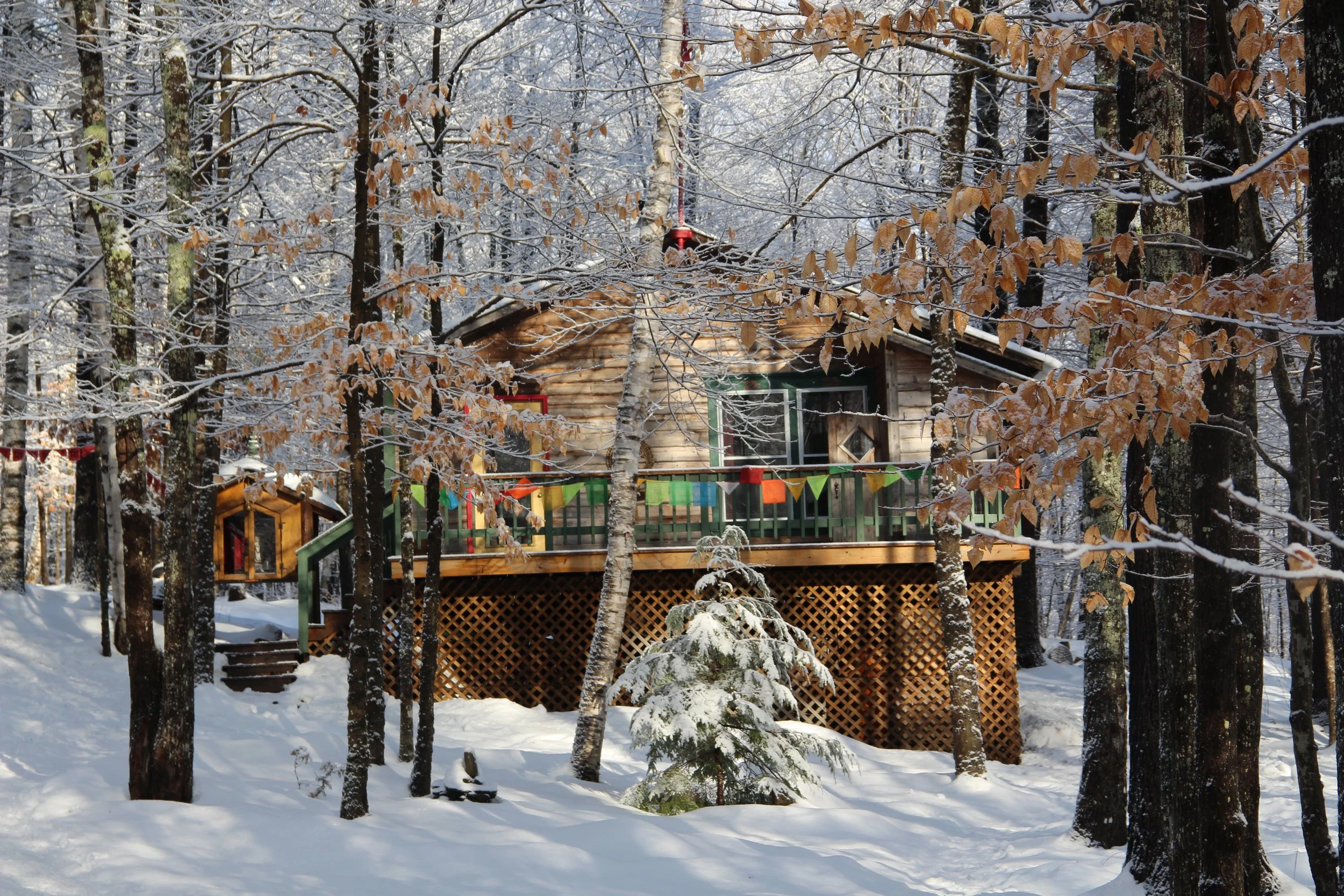
The strawbale Yoga Shala, for morning asana and pranayam.
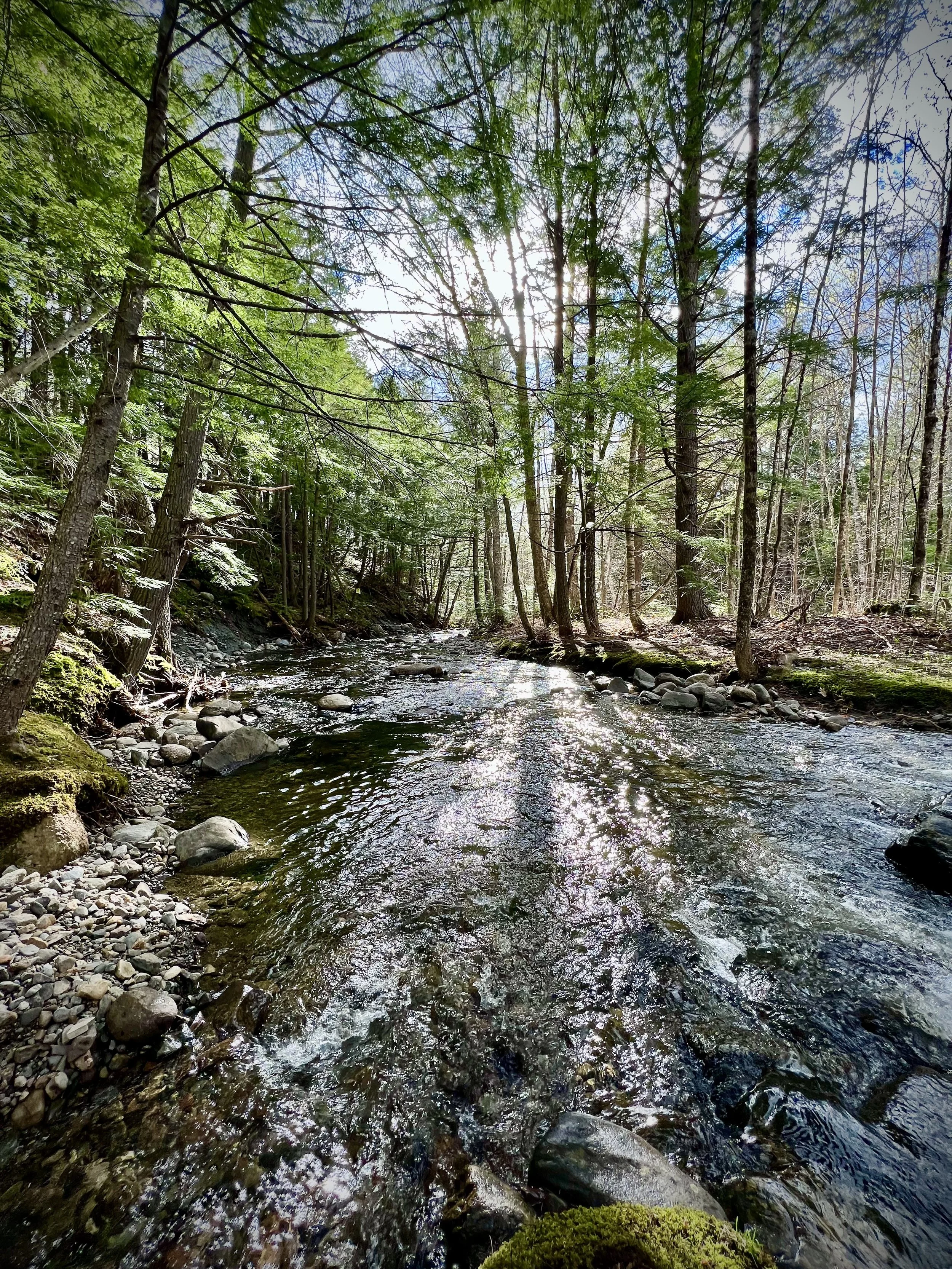
The Ashram Ganga runs the length of the property.
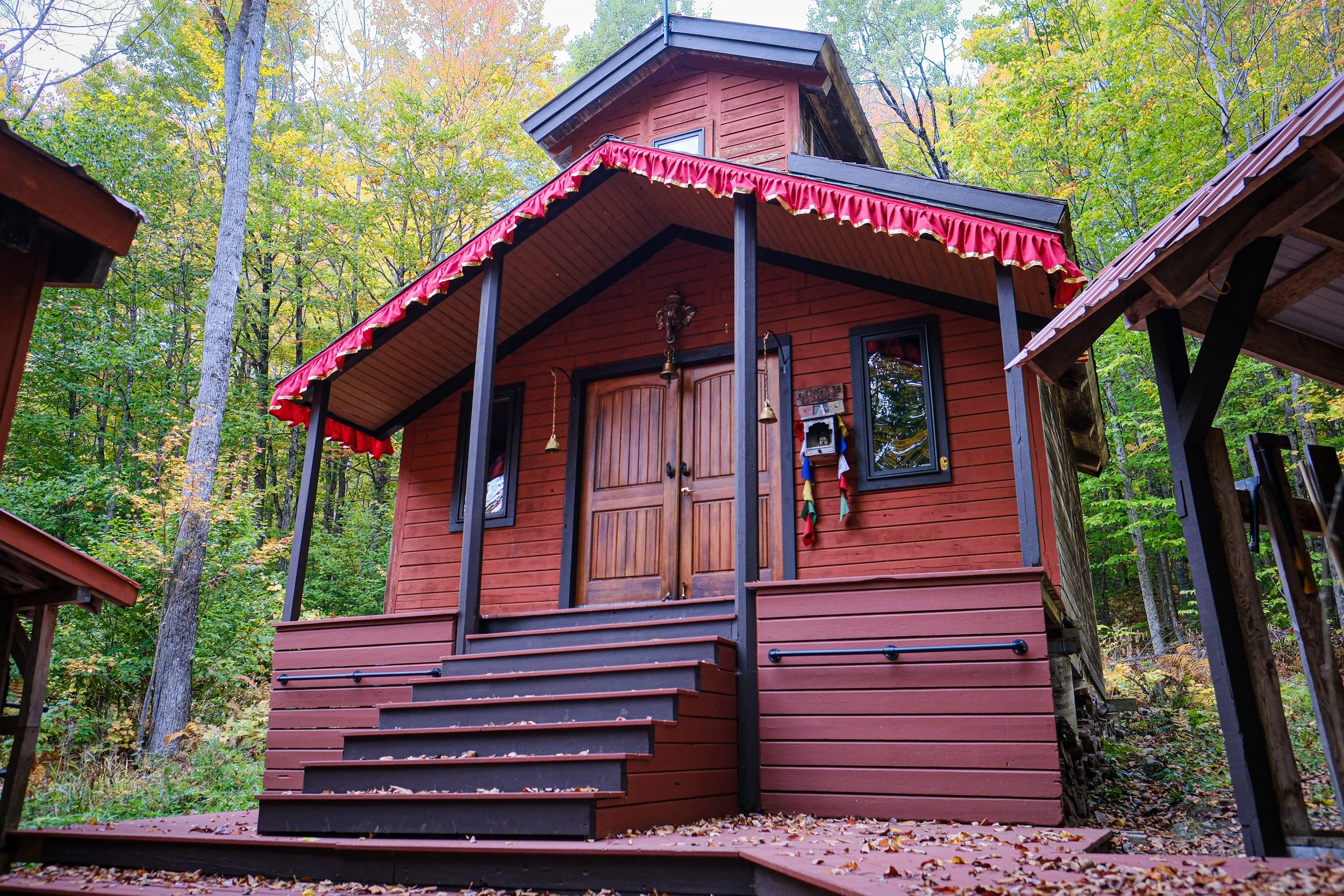
The cedar log temple to Shiva, where the day ends in meditation.
The Life
Seventeen people live here full time. Some grew up nearby. Others crossed oceans to get here. The oldest Yogi is eighty-two. The youngest is six—fourth generation of her family to call Sat Manav home.
This is the difference between a place that teaches Yoga and a place that lives it: teaching pauses when the room empties. What happens here is continuous.
The steadiness the Rishis speak of cannot be lived alone. It is sustained in a life fully shared—the same meals, the same work, the same Sādhana. Modern life scatters people across separate homes, separate schedules, separate lives lived at a polite distance from one another, and far removed from nature. Here, that division simply doesn't exist.
The daily work of the Ashram—the firewood, the gardens, the trails, the meals—moves through its own seasons, and everyone moves through them together.
Spend a day here and the practice stops being something explained to you. It becomes something you feel, actually being lived.
Why It's Lived This Way
Every part serves the same purpose.
None of it is incidental.
Modern life pulls human attention in countless directions. Over time, the body becomes overstimulated, the mind becomes restless, and it grows harder to feel what is essential. The life of the Ashram is designed to reverse that pattern.
Clean air. Darkness at night. Deep sleep. Real food. Daily movement. Long periods without interruption. Buildings heated by woodstove and cooled by open windows. Two small off-grid solar systems provide what electricity is needed; some buildings have none at all.
These are conditions the Yogic tradition has valued for thousands of years because they help the nervous system settle into its natural rhythm—one marked by calm, clarity, stability, and renewed vitality.
When life becomes simpler, attention becomes clearer. When attention becomes clearer, practice can go deeper. That is the intention of all of this.
Visiting the Ashram
Not as spectators. As participants.
Visitors are welcomed through day visits, immersion retreats, and seasonal gatherings.
Whether you come for a few hours or a few months, you are welcomed into the life of the Ashram.
For some, it is time away from the demands of everyday life. For others, it becomes the beginning of a different way of living.